
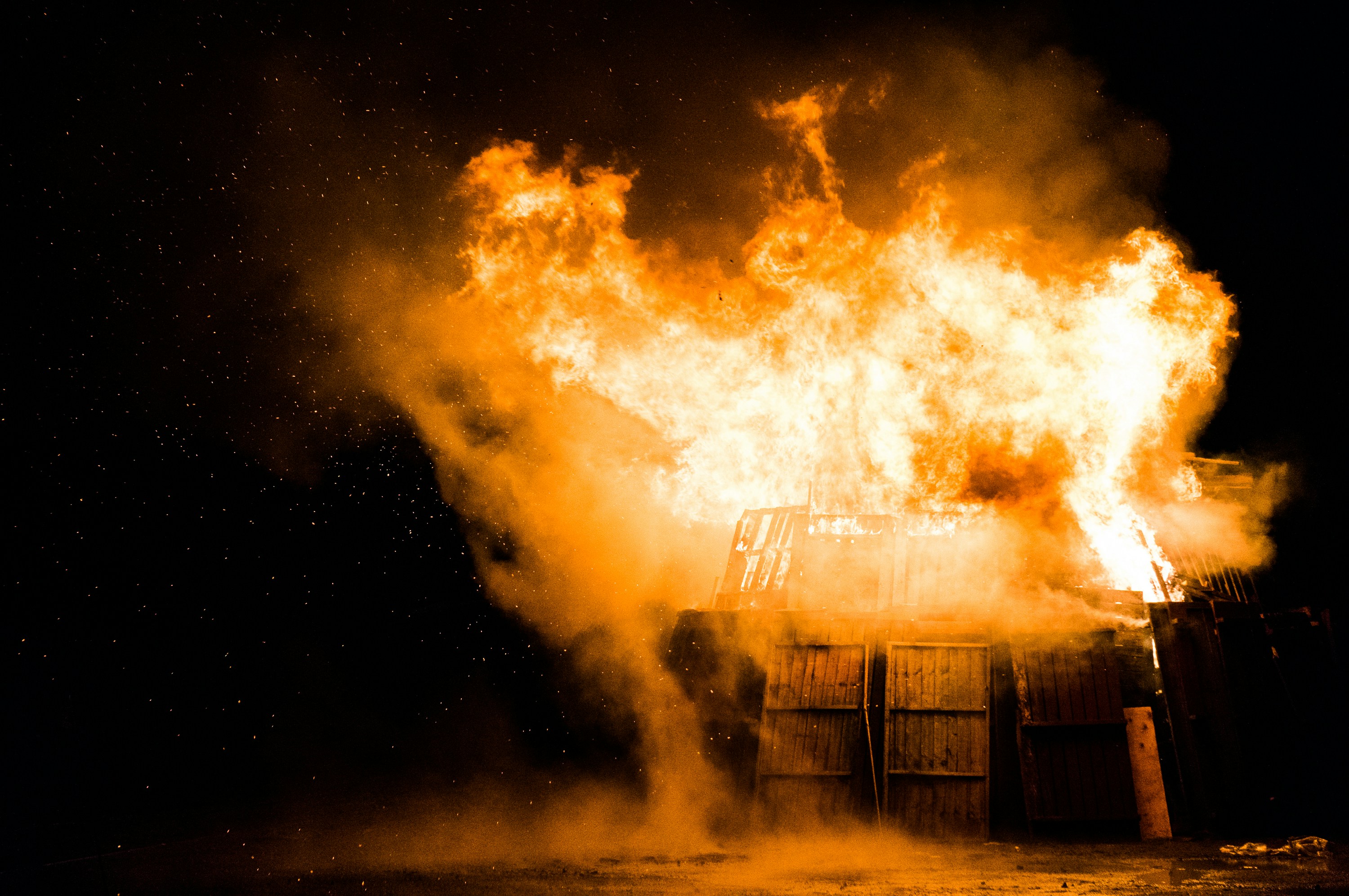
If you burn someone else’s property without their consent, you can be charged with arson in Utah, and in some circumstances it may even result in an aggravated arson charge. These are serious offenses, and if you’re convicted, you may spend some time in jail or even prison.
In Utah, arson charges range from a class B misdemeanor to a second-degree felony. The type of charge you get determines how much time you can expect to be incarcerated and where. Here’s how it breaks down:
Of course, these punishments are the worst-case scenario. Whether you’re found guilty or you’re going for a plea deal, an experienced lawyer can help you reduce the sentence.
Arson is considered an offense against property. Like other crimes in this category, the type of charge you’ll get is dependent on how much money in damages you cause. If the damage is $500 or less, then that is a class B misdemeanor, and between that amount and $1,500 is a class A misdemeanor.
Once the damage exceeds $1,500, that is felony territory. From that amount to $5,000, it is a third-degree felony. A second-degree felony is $5,000 or above.
When you see the word “aggravated” in front of any crime, that means the circumstances around the crime can bring about tougher punishments.
Aggravated arson is a first-degree felony in Utah. This means prison time of five years to life and a fine of up to $10,000. There are two ways this can happen:
If you’re charged with aggravated arson, it might not be the only charge you are facing. For example, let’s say you burn down a car, and someone is inside. If that person dies, you might be facing homicide charges. You may also be charged with burglary if you unlawfully entered the property where the arson took place.
Those charges can add up against you. If you’re found guilty of all of it, a judge will determine your sentencing based on the individual charges. For example, burglary is a second-degree felony. So you may get sentenced 10 years for the aggravated arson and then another six years for burglary.
However, if you are facing multiple charges, a competent defense attorney may be able to get some of them dropped. This could be through plea deals or motions for the judge to dismiss some of the charges that are less relevant.
If you’re charged with aggravated arson, it’s not a good idea to try defending yourself. The legal system is complicated, and if you make a wrong move, you can end up with a worse punishment than you actually deserve. Police officers, prosecutors, and judges are all very important people, but their job is not to help you out. It’s to make sure justice is served.
That’s why you need to hire a defense attorney who can guide you through the entire process. They’ll be able to advise you on what your best options are, file necessary motions, and either come up with a plausible defense or work with prosecutors to get you the best plea deal possible.
Let’s say you get charged with aggravated arson, but you didn’t do it. This can be a scary situation, and it does happen to people. However, the law is on your side. In order to get convicted, the state has to prove beyond a reasonable doubt that you committed the crime. Here are a few possible defenses your lawyer might use:
When choosing the right attorney, it’s not enough that they are educated. You need someone who has a lot of experience. That person will have learned everything they need to defend your particular case.
For aggravated arson, the best lawyers at Brown, Bradshaw & Moffat include Kristin Wilson, Michael Holje, Ann Taliaferro, and Mark Moffat. All of these lawyers have a lot of experience with this kind of crime, and they would be willing to help you out.
Tell us about your case to get started, and a member of our team will reach out to you.


